
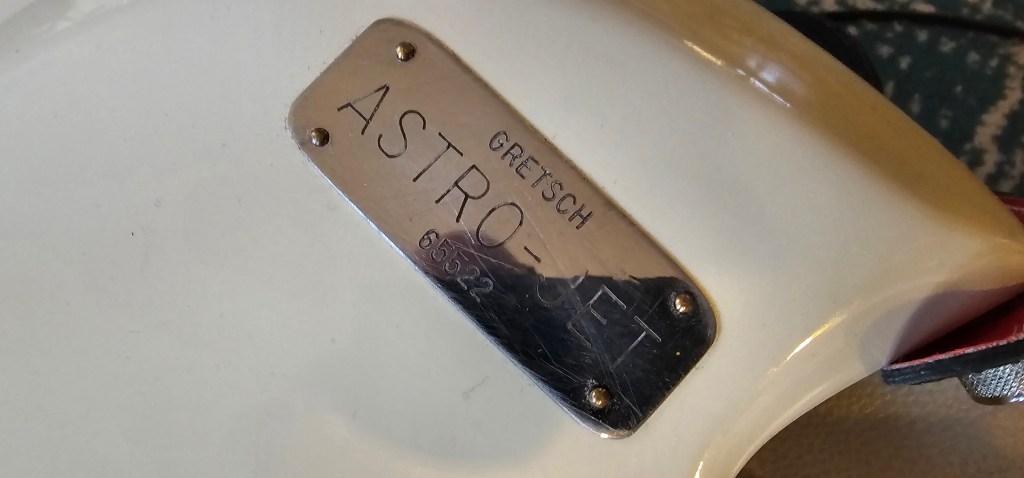
In 1964, Gretsch introduced a bizarre offset amalgam of their own Corvette and, pretty clearly, the Gibson SG. With a solid mahogany body and set neck, a bound 24 1/2″ (!) scale ebony fingerboard with neo-classical thumbnail inlays, and the new bladed variation of the Ray Butts Filtertron, the Super‘Tron, these were high end guitars.

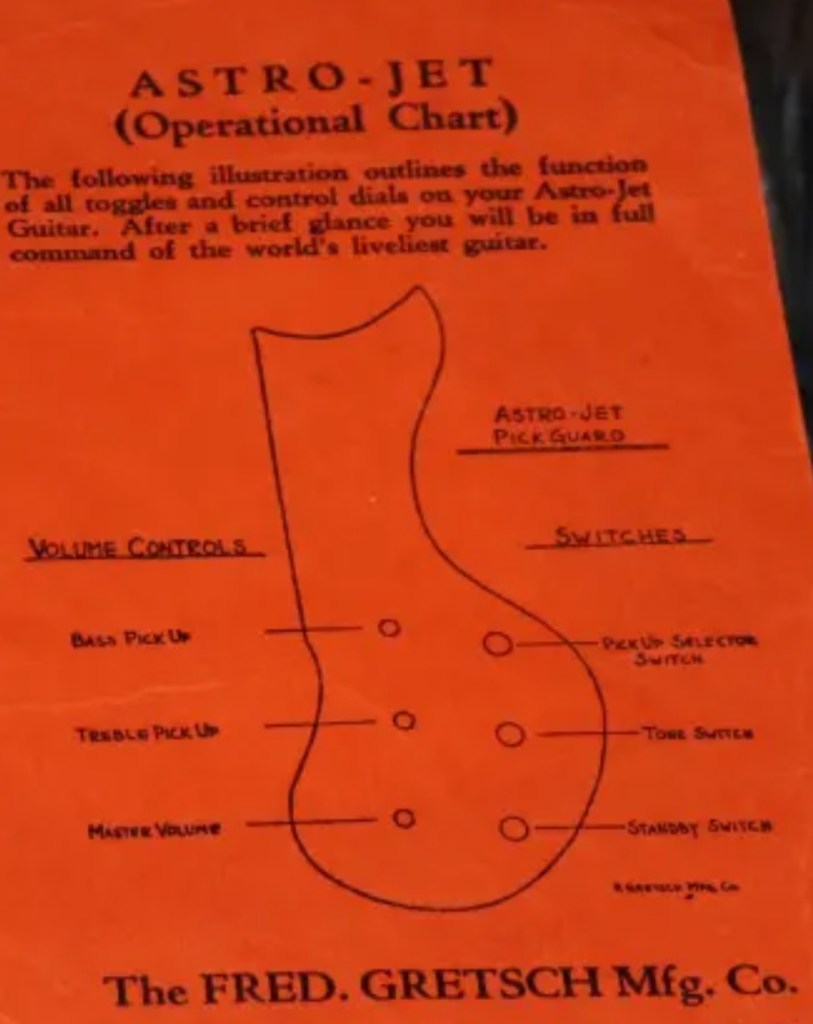
Firmly ensconced in the Gretsch tradition of suigeneris conrol layouts, they had individual volume knobs plus a master volume, a three-way pickup select, a three-way tone select (mid-bass, treble, heavy bass), a three-way standby toggle, and the Burns vibrato generally in use on their solid bodies. They were available only thickly finished in red with black backs and necks.
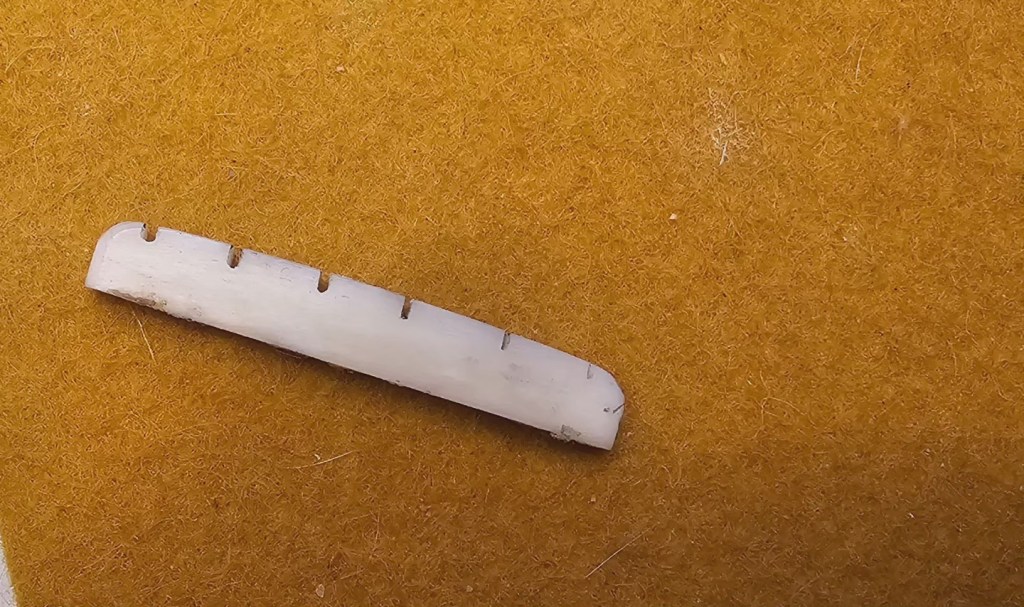
Somebody refinned this ’64 in thin white nitro a good ways back. It’s a very nice refin. The new (I guess) nut they made was less successful, poorly spaced, less than ideally angled, overly deep, and prone to binding.
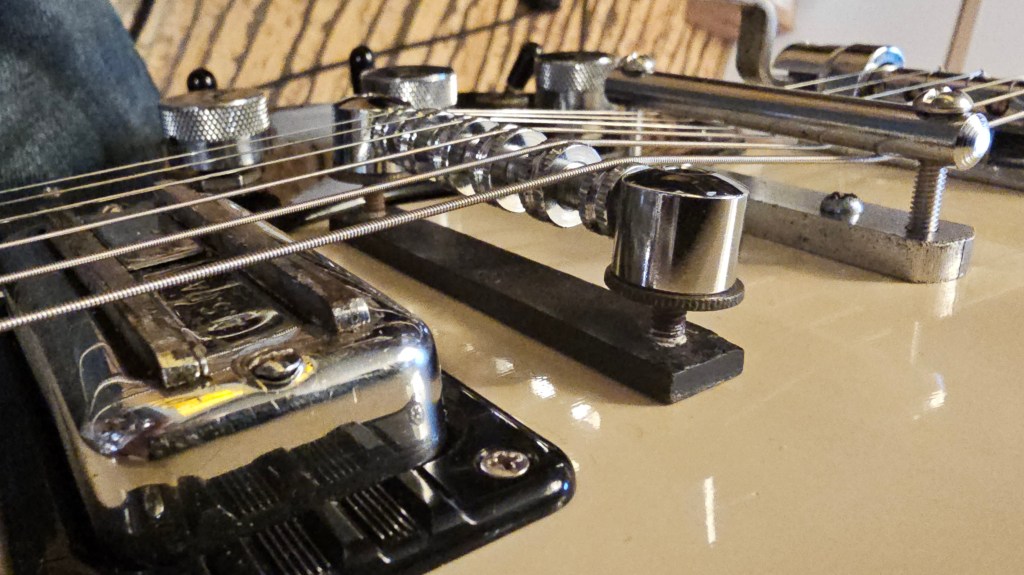
The Burns and the space control bridge (my least favorite gretsch bridge, but the threaded saddles roll helpfully) needed cleaning and lubrication. Once all of that was set, I could adjust spring tension and get a reliable return to pitch from slacked strings. It’s less reliable when the pitch is raised, but I haven’t been able to solve that completely without taking it flat after the pull. I had always wanted to try a Burns. They say to be careful with that stuff.
I suspect I’ll swap the bridge sooner or later (very tempted to drill for an M1 with some Mascis posts), but I’ll play it like this for a while. I did a bunch of work on the board, frets, and neck and gave it a new unbleached @s.finternationalsupply bone nut.
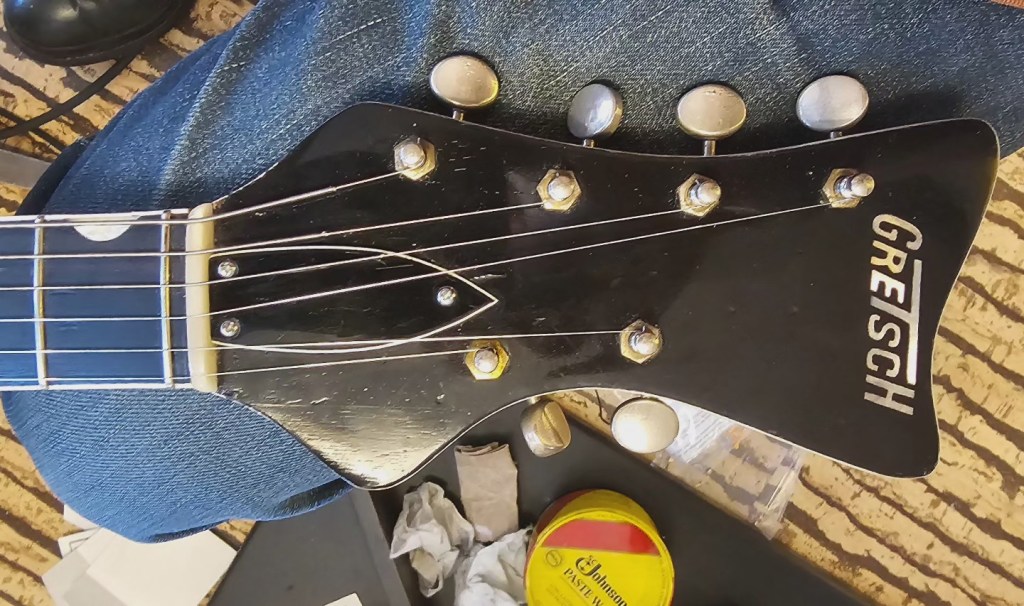
Very weird nut to cut, but the blank (I cut down a saddle blank) was lovely. Thanks to Sam for the blank, Gabriel @elgtsco for the wonderful trem wrapped balanced 10s, and Jimmie Webster (yep!) for the fun-house (see headstock, but not only the headstock) Jetsons design.
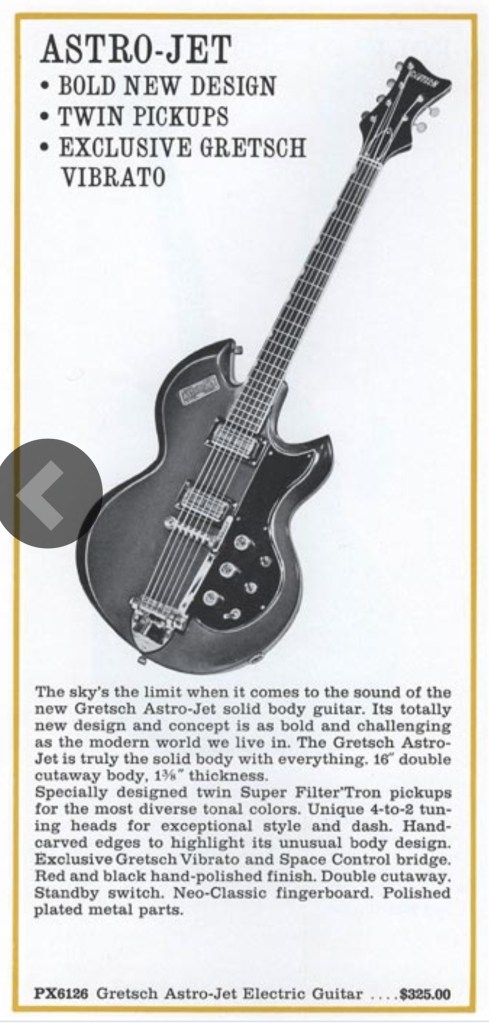
A couple weeks after I did all the physical work on this guitar, I was still trying to chase all the ghosts out of the wiring loom, thinking every time that I’d routed them before finding another small issue. They were all hiding behind each other. I know they do that, but this was impressive.
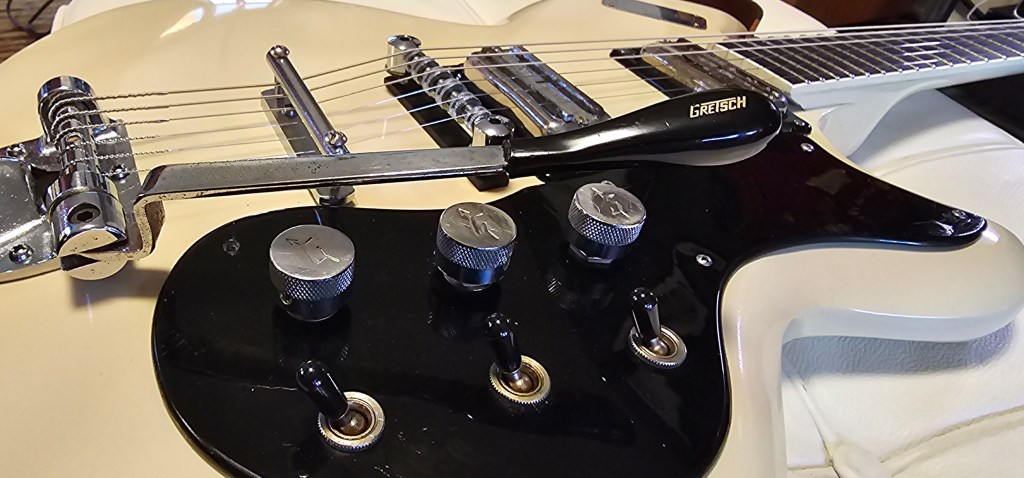
Pots and switches were all a little bunged up: check. The jack ground had never quite been soldered, and the splined cup needs to be carefully removed and reinstalled: check.
In addition to the connection breaking up, it was still intermittently responding to both control contact and proximity with static crackle. Found and fixed a barely broken ground connection on one of the mud switch caps and looked for, found, and fixed a couple of suspects: check. But the symptom persisted, so I reflowed every solder joint, including about a dozen or so grounds. Finally dead silent! Still maddeningly breaking up here and there.
Having knocked out competing problems, I could finally diagnose analytically one position at a time. I’m sure this is old hat, but I’d never had the problem: the contact strips on the 3-way were bent out just enough by use that they would vibrate apart. Very satisfying to finally figure out, even if it took me an embarrassingly long time.
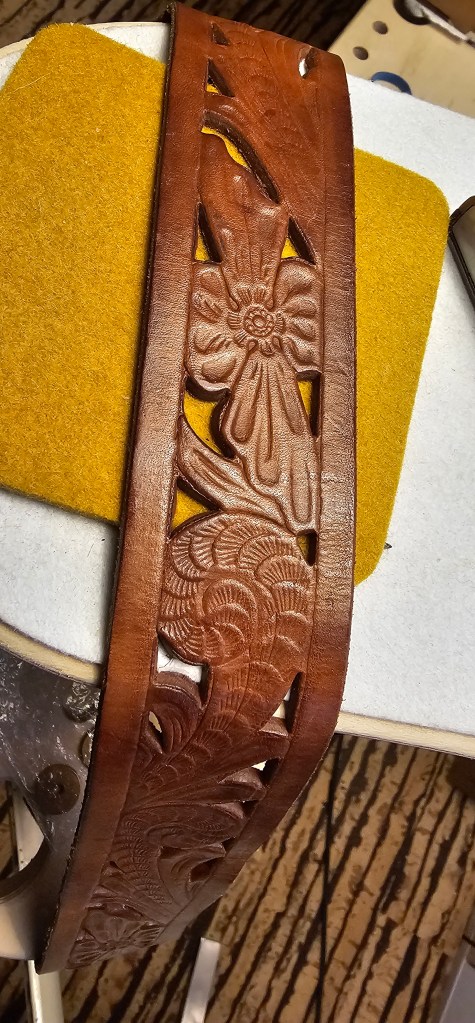
When the strap arrived from Mark @loft_relics_guitar_straps, it turned out my guess on length had been spot-on, and it looked terrific on the guitar, but I decided it’d look better if it were red instead of tan–and lightly antiqued to pop those fiddleheads. So Feibings. Thanks to Matt @matt_codinaleather for the timely antiquing advice.
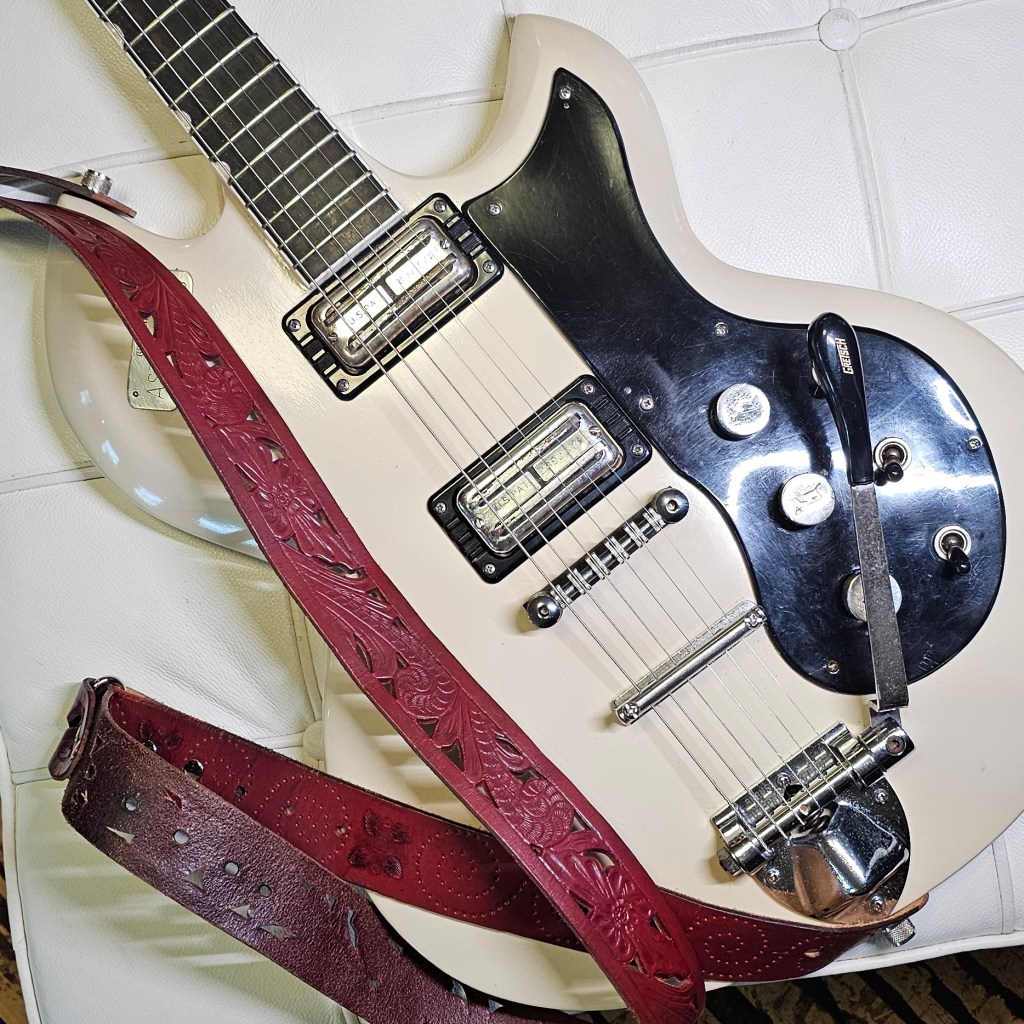
EVerything works now, including the stap. As goofy-footed as it looks, this guitar is shockingly well-balanced and just a whole lot of fun, and the less muddy side of the switch gives the Super‘Trons a glorious cocked wah sound with the right gain.
#64gretschastrojet #downhomesophisticate
 smithmusicroom
Were you able to improve the performance of the Burns Vibrato? I have one and it fails to return to pitch. Did the new nut help? Any insight would be appreciated.
The nut did help. Unbleached bone has good hardness and lubricity, and properly cut, unbinding, radiused slots (with no pings when tuning up) make a huge difference to any vibrato returning to pitch. I like to aim the slots, but you can argue for or against that. A little Burt’s Bees applied with a toothpick to each slot helps too.
Disassembling, cleaning, and lubricating the bridge and saddle threads and the vibrato and polishing the tension bar smooth also helped.
It returns well if you lower pitch. It’s less reliable returning from raised pitch, but if I finish a pullback by slacking pitch a touch, that usually does the trick. It may do better with 11s. I’ll probably try a set of 11-49s next time; equilibrium is the key, and it may be that the spring is just a touch too much–even with tension adjusted properly–for the string tension from 10-48s to counter, but I do think the Burns design is a little janky.
Thanks for such a thoughtful reply!
I hope it helps, Jesse!